Solar Maintenance : Essential Tips for Peak Performance and Longevity
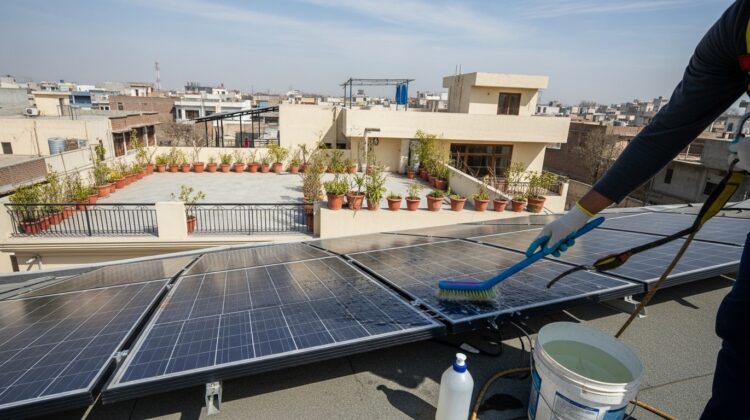
Congratulations on your solar investment—a step towards energy independence and lower electricity bills. To ensure your system delivers maximum power and a strong return on investment for its entire 25+ year lifespan, proper Solar Maintenance is essential. The good news? Solar systems are remarkably low-maintenance, but a simple, regular routine can prevent minor issues from becoming major problems. This guide provides all the practical tips you need, from daily visual checks to professional servicing.
Your Essential Solar Maintenance Schedule
A proactive approach, combining your own regular checks with periodic professional inspections, is the key to long-term performance.
| Task | Frequency | Who Does It? | Key Purpose |
| Visual Inspection | Monthly | Homeowner | Spot physical damage, debris, or shading. |
| Performance Monitoring | Weekly / Monthly | Homeowner | Ensure system is generating expected power. |
| Panel Cleaning | Every 2-4 Months (or as needed) | Homeowner or Professional | Remove dust, dirt, and bird droppings that block sunlight. |
| Professional System Check | Annually | Certified Technician | Comprehensive electrical, mechanical, and safety inspection. |
| Inverter & Meter Check | Monthly (Visual) | Homeowner | Ensure devices are on and displaying normal readings. |
Solar Panel Cleaning: A How-To Guide
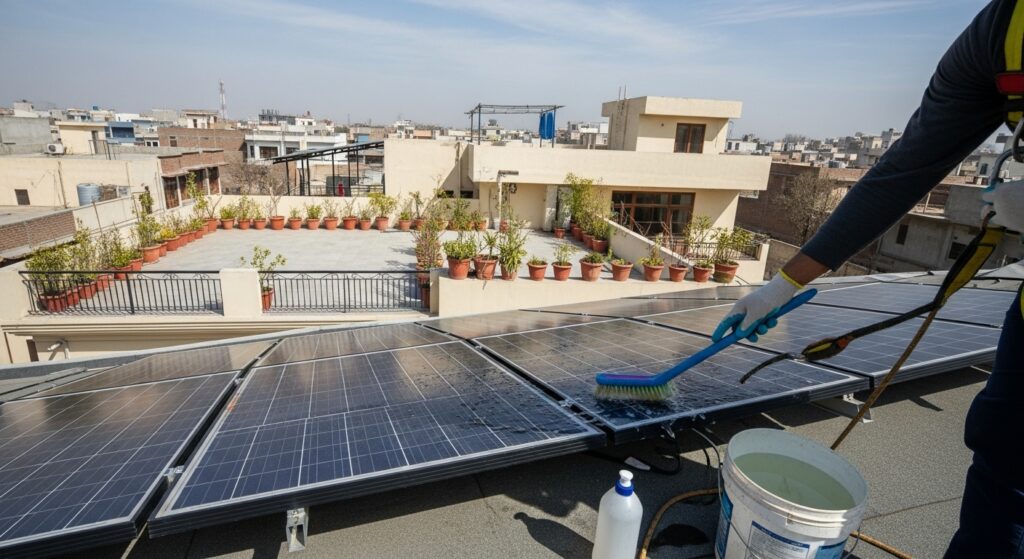
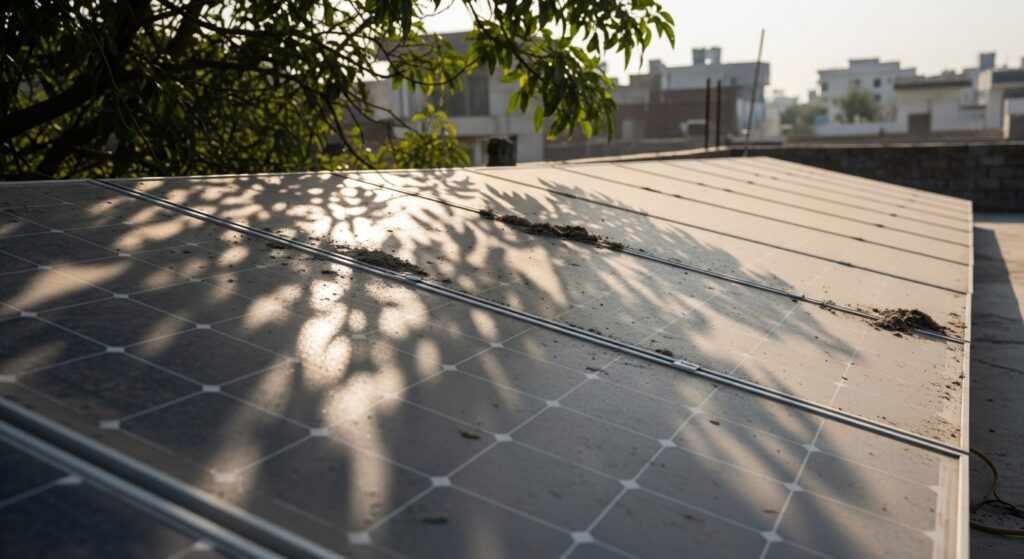
Clean panels are efficient panels. Dust, pollen, and bird droppings can significantly reduce energy output.
When to Clean: Aim for every 2 to 4 months. Clean more often after dust storms, long dry spells, or if you live near farmland or a busy road. The best time is early morning, late afternoon, or on a cloudy day when panels are cool to avoid thermal shock and rapid drying which can leave streaks. Regular Solar Maintenance at these intervals ensures optimal performance.
What You’ll Need:
A garden hose with a spray nozzle
A soft brush or sponge with a long handle (use one designed for solar panels)
Bucket of lukewarm water
Optional: A small amount of mild, non-abrasive soap (like dish soap)
Step-by-Step Cleaning Process (Solar Maintenance Tips):
Safety First: If your panels are roof-mounted, prioritize safety. If you’re not comfortable on the roof, hire a professional. For ground-mounted systems, ensure the system is switched off as per your installer’s instructions Rinse First: Use the hose to spray off loose dust and dirt. This prevents scratching during scrubbing.
️Gently Scrub: Dip your soft brush or sponge in soapy water and gently wipe the panel surface. Never use abrasive pads, harsh chemicals, or high-pressure water jets, as these can scratch the protective glass coating.
Final Rinse: Thoroughly rinse the panels with clean water to remove all soap residue.
Air Dry: Let the panels air dry. Avoid wiping with a cloth that may leave lint. Performing this as part of regular Solar Maintenance helps maximize energy output and longevity.
Routine Visual Inspections: What to Look For
Spend a few minutes each month visually inspecting your system from the ground (use binoculars if needed) as part of regular Solar Maintenance.
Panels: Look for cracks, chips, discoloration (hot spots), or moisture ingress. Check for any new shading from growing tree branches or new constructions to ensure proper Solar Maintenance.
Mounting & Racking: Ensure all bolts and clamps are tight and there is no corrosion. The structure should remain stable for effective Solar Maintenance.
Wiring & Conduits: Check for exposed, frayed, or chewed wires (a risk from pests). Ensure conduit connections are secure, which is critical in your monthly Solar Maintenance routine.
Inverter: The unit should be free of error messages or warning lights. Listen for any unusual buzzing or humming noises. Ensure its vents are not blocked by debris as part of Solar Maintenance checks.
Monitoring Your System’s Performance
Your solar inverter or monitoring app is your system’s health dashboard. Get in the habit of checking it.
- Establish a Baseline: Note your system’s average daily or weekly energy production during clear, sunny weather.
- Check Regularly: Look for any sudden, unexplained drops in production. A gradual decline over years is normal (about 0.5% per year), but a sharp fall indicates a potential issue.
- Compare to Weather: Lower production on cloudy or rainy days is normal. Compare output to days with similar weather.
Professional Annual Maintenance
Once a year, schedule a maintenance visit from a certified technician, like the team at Aziz & Co. Electronics. A professional check-up includes:
- Electrical Testing: Verifying voltage, current, and grounding to ensure safe and efficient operation.
- Thermal Imaging: Using a special camera to detect “hot spots” in panels or connections that are not visible to the naked eye, indicating potential failures.
- Torque Check: Tightening all electrical connections and mounting hardware, which can loosen over time due to thermal expansion.
- Inverter Diagnostics: Running full diagnostics on the inverter and checking for firmware updates.
Common Issues & Troubleshooting Tips
| Problem | Possible Cause | Immediate Action |
| Zero Production | Inverter switched off, main breaker tripped, grid outage (for on-grid systems). | Check inverter display and main electrical panel. Reset breakers if safe to do so. |
| Low Production | Dirty panels, partial shading, inverter fault, or seasonal changes (shorter days). | Clean panels, check for new shading, review monitoring data. |
| Inverter Error Code | Internal fault, grid voltage issue, overheating. | Note the exact code and contact your installer for diagnosis. |
| Physical Damage | Hailstorm, fallen branch, or weathering. | Do not touch damaged panels. Turn the system off via the AC and DC isolators and call your installer immediately. |
Seasonal Considerations in Pakistan
- Summer: More frequent cleaning may be needed due to dust storms. Ensure good airflow around the inverter to prevent overheating.
- Monsoon: Heavy rain can naturally clean panels. However, check for proper drainage and that mounting is secure against high winds.
- Winter: Output will be lower due to shorter days and sun angle, which is normal. Snow is rare in most of Pakistan, but if it does occur, it will usually slide off tilted panels as they warm up.
When to Call a Professional
While DIY cleaning and visual checks are great, always call your installer for:
- Any electrical work or rewiring.
- Repairing broken panels or mounting structures.
- Inverter faults or persistent error codes.
- The annual professional inspection.
Conclusion: Protect Your Investment with Simple Care
A small amount of regular attention to your solar system Solar Maintenance it operates at peak performance, maximizing your savings and extending its life. By following this simple schedule of cleaning, inspection, and monitoring, you safeguard one of the smartest investments you can make for your home and our planet’s future.
Keep your system clean, keep an eye on its performance, and partner with a trusted professional for annual check-ups. Your solar panels will reward you with decades of clean, reliable, and affordable energy.