Solar Battery Guide for Pakistan: Lead Acid vs. Lithium vs. JBMS
Why Your Solar Battery Choice Matters
For homeowners and businesses across Pakistan investing in solar power, the right Solar Battery what transforms a simple bill-saving system into a true fortress against load-shedding. It’s the component that stores the sun’s energy, ensuring your lights stay on, your fans keep spinning, and your business operates uninterrupted when the grid fails.
While Aziz & Co. Electronics has been installing reliable solar systems for over a decade, we consistently see that the Solar Battery is where most confusion lies. The market offers several technologies, each with different price tags, lifespans, and performance characteristics. This guide cuts through the complexity to explain the three main types of solar batteries available in Pakistan: traditional Lead Acid, modern Lithium-ion, and the innovative JBMS. By the end, you’ll know exactly which one aligns with your needs and budget.
Understanding Solar Battery Three main Types
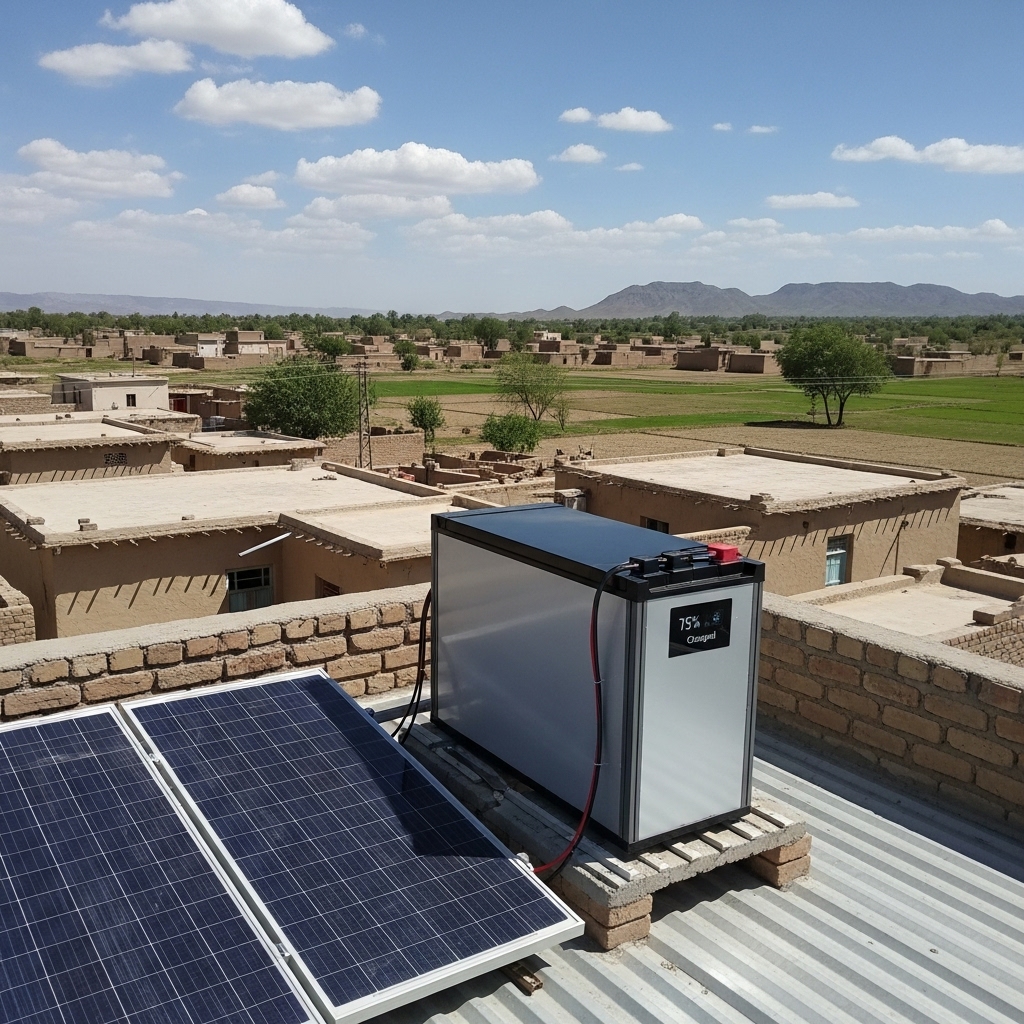
1. Lead Acid Batteries (The Conventional Workhorse)
Lead Acid batteries are the oldest and most widely recognized technology. They come in two main subtypes: the cheaper Flooded Lead Acid (FLA) and the more maintenance-free Sealed Lead Acid (SLA), which includes Absorbent Glass Mat (AGM) and Gel batteries.
- How Solar Battery Work: Based on a chemical reaction between lead plates and a sulfuric acid electrolyte. They release energy when discharging and store it when charging from solar panels or the grid.
- Best For: Budget-conscious users with infrequent, short-duration backup needs or those with very large battery banks where upfront cost is the primary concern.
- Pros:
- Lower Initial Cost: The cheapest entry point per battery unit.
- Wide Availability: Easily found and serviced across Pakistan.
- Cons:
- Shorter Lifespan: Typically lasts 2-4 years in solar use due to regular deep discharging.
- High Maintenance (FLA): Requires regular topping up with distilled water and ventilation.
- Lower Depth of Discharge (DoD): You can only use about 50% of their rated capacity regularly without damaging them.
- Slower Charging: Takes longer to recharge, which can be problematic on cloudy days.
2. Lithium-ion Batteries (The Modern Standard)
Lithium-ion (Li-ion) technology, particularly Lithium Iron Phosphate (LiFePO4), has become the preferred choice for modern solar systems due to its superior performance and longevity.
- How They Work: Uses lithium ions moving between a cathode and anode. LiFePO4 chemistry is favored for solar due to its exceptional thermal and chemical stability.
- Best For: The vast majority of homeowners and businesses seeking reliable, long-term, hassle-free backup. Ideal for daily load-shedding cycles.
- Pros:
- Long Lifespan: Can last 8-15 years, often outliving the solar panels themselves.
- High Depth of Discharge (DoD): You can safely use 80-90% of the rated capacity daily.
- Zero Maintenance: Completely sealed, no watering, and can be installed indoors.
- Higher Efficiency & Faster Charging: Loses less energy as heat and recharges quickly.
- Cons:
- Higher Initial Cost: 2-3 times more expensive than Lead Acid upfront.
- Temperature Sensitivity: Requires protection from extreme heat, though LiFePO4 handles it better than other lithium types.
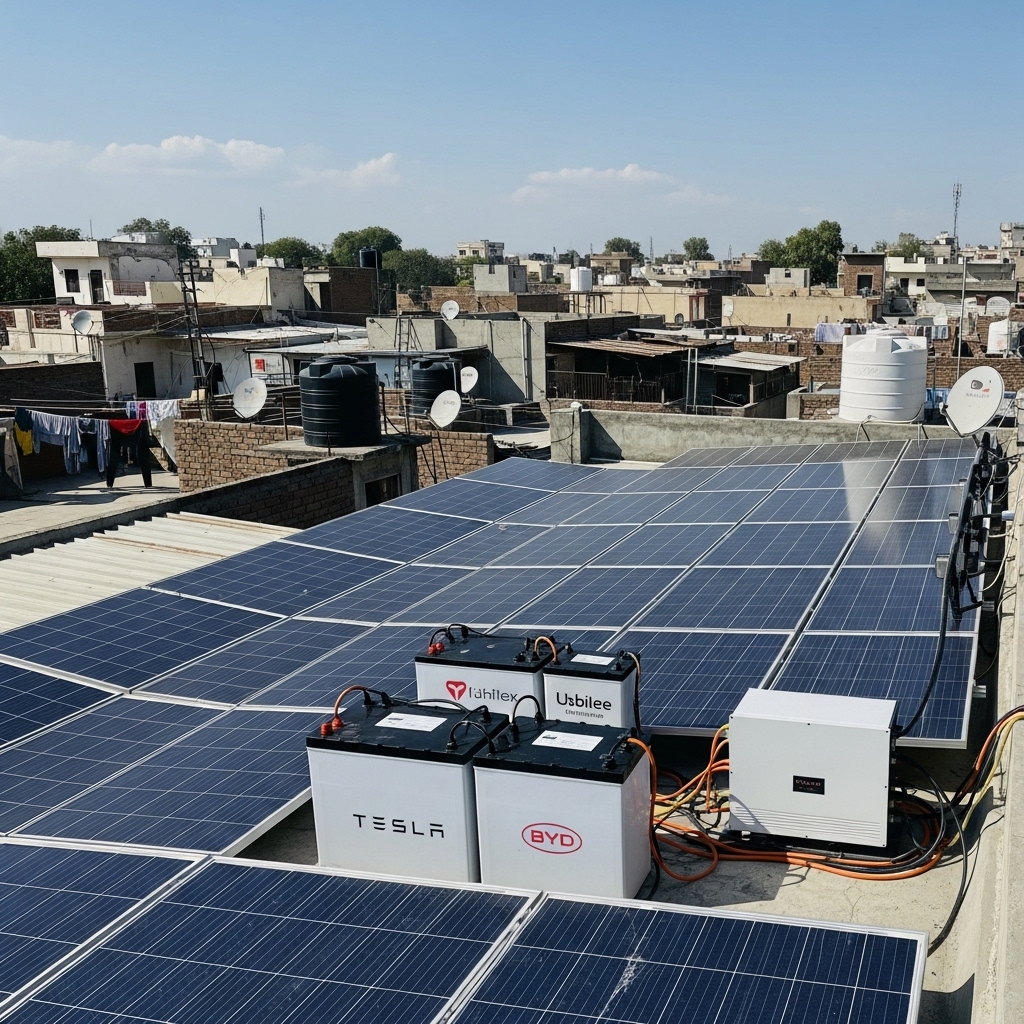
3. JBMS Batteries (The Smart, Integrated Solution)
JBMS (Junction Box Management System) is not a new chemistry but a significant evolution in battery design. It refers to Lithium-ion batteries with a built-in, advanced Battery Management System (BMS) integrated into the Solar Battery casing itself.
- How They Work: These are premium LiFePO4 batteries where the intelligent BMS is not a separate box but is seamlessly built-in (“JBMS”). This system meticulously monitors and protects each cell for voltage, temperature, and current.
- Best For: Users who prioritize maximum safety, plug-and-play installation, smart features, and peak performance. Perfect for modern hybrid solar systems.
- Pros:
- Enhanced Safety & Longevity: The integrated BMS provides superior cell balancing and protection, extending battery life.
- Easy Installation & Scalability: Simple to connect and easy to expand your bank by adding more units in parallel.
- Smart Communication: Often includes Bluetooth/USB to monitor battery health and status via a smartphone app.
- Cons:
- Premium Price: The most expensive option due to the advanced integrated technology.
- Professional Support Needed: Repair or service of the integrated BMS requires a specialist.
Comparison Table: Which Solar Battery is Right for You?
| Feature | Lead Acid (AGM/Gel) | Lithium-ion (LiFePO4) | JBMS (Advanced Lithium) |
| Initial Cost | Low | High | Highest |
| Lifespan (Years) | 2-4 | 8-15 | 10+ (with optimal BMS) |
| Depth of Discharge (DoD) | ~50% | 80-90% | 80-90% |
| Maintenance | Low to Moderate | None | None |
| Efficiency | 80-85% | 95-98% | 95-98% |
| Installation | Simple, needs ventilation | Simple, flexible location | Easiest, plug-and-play |
| Best Use Case | Low-budget, infrequent backup | Daily use, long-term value | High-performance, smart systems |
Key Factors for Choosing the Best Solar Battery in Pakistan
- Backup Requirements: Calculate the total wattage of essential appliances you need during an outage and for how many hours. This determines the battery capacity (Ah) you need.
- Budget vs. Long-Term Value: While Lead Acid is cheaper today, its need for replacement every 3 years often makes Lithium-ion the more economical choice over a 10-year period.
- System Compatibility: Ensure your solar battery and inverter is designed to work with your chosen battery technology. Modern hybrid inverters are optimized for lithium batteries.
- Warranty & Brand: Choose reputable brands that offer strong warranties. A trustworthy installer like Aziz & Co. Electronics will provide clear warranty terms and reliable after-sales support for all components.

Frequently Asked Questions (FAQs)
Q: Which is truly the best solar battery for a typical home in Pakistan?
A: For most homes facing daily load-shedding, Lithium-ion (LiFePO4) batteries offer the best balance of performance, lifespan, and value. While the upfront cost is higher, the long-term savings and hassle-free operation justify the investment.
Q: Is JBMS worth the extra money over a standard lithium battery?
A: If you value ease of installation, advanced safety features, and smart monitoring, then yes. For a standard setup, a quality lithium battery with a good external BMS is often sufficient. JBMS represents the premium, user-friendly tier of lithium technology.
Q: Can I add lithium batteries to my old solar system with lead acid?
A: It is strongly discouraged. The charging profiles and voltages are very different. Mixing them can damage the batteries and pose a safety risk. The entire battery bank should be of the same type and age.
Q: How can I make my solar batteries last longer?
A:
- Avoid Deep Discharging: Regularly draining batteries below their recommended DoD shortens life.
- Keep Them Cool: Install batteries in a shaded, well-ventilated area away from direct heat.
- Use a Quality Charge Controller/Inverter: Ensures batteries are charged correctly.
- Follow Manufacturer Guidelines: Use the recommended charging voltage and currents.
Conclusion and Recommendation
Choosing the right solar battery is a critical decision that impacts your system’s reliability, cost, and convenience.
- Choose Lead Acid only if your budget is extremely constrained and you need backup for very short, occasional outages.
- Choose Standard Lithium-ion (LiFePO4) for the best all-around solution for daily use, offering excellent longevity and performance.
- Choose JBMS Lithium if you want the most advanced, plug-and-play, and smart battery system with integrated management.
Investing in a quality battery from a trusted supplier ensures peace of mind for years to come. By understanding these key differences, you can partner with your solar battery installer to select the perfect energy storage solution for your Pakistani home or business.