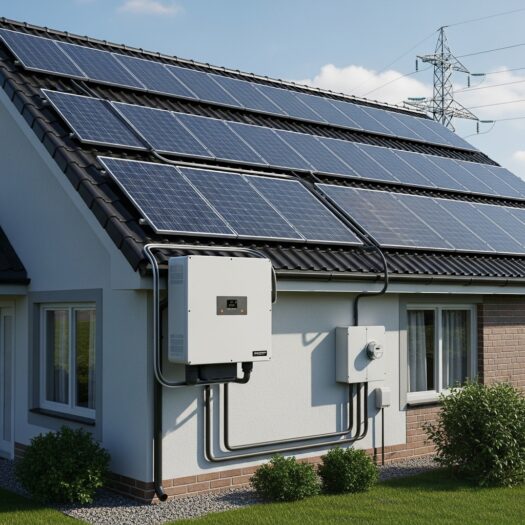
For homeowners and businesses in areas with a stable power supply, an on-grid inverters solar system is the most direct path to maximum financial return. These systems connect directly to the national electricity grid (like WAPDA), allowing you to use solar power during the day and seamlessly rely on the grid at night. The key component that makes this profitable is the on-grid inverter, a device engineered for one primary goal: to convert your solar energy and turn surplus power into bill credits through net metering, maximizing your savings.
At Aziz and Co Electronics, we specialize in designing and installing high-efficiency on-grid systems that deliver a rapid return on investment (ROI) by dramatically reducing or even eliminating your electricity bills. If your priority is cutting costs without the need for battery backup, an on-grid solution is your smartest choice.
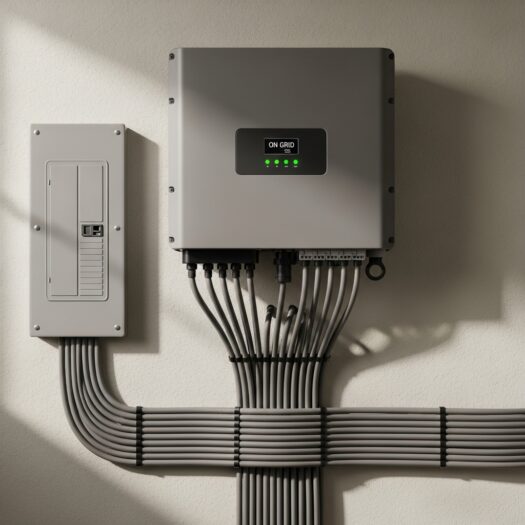
An on-grid inverter is the intelligent center of a grid-tied solar system. Its operation is elegantly simple and highly effective:
It continuously converts the DC (Direct Current) electricity generated by your solar panels into AC (Alternating Current), which powers all your home and business appliances.
This AC power is supplied directly to your property. Your lights, fans, ACs, and machinery run on clean solar energy as long as the sun is shining.
This is the critical function. When your solar panels produce more electricity than you are using, the on-grid inverter automatically feeds the excess power back into the national grid.
A special bi-directional meter (net meter) records every unit you export. These exported units become credits that offset the cost of the units you draw from the grid at night or on cloudy days.
Choosing an on-grid system over more complex alternatives like hybrid or off-grid systems comes with distinct financial advantages, especially in urban areas of Pakistan.
| Feature | On-Grid System Advantage |
|---|---|
| Upfront Cost | Most Affordable. No need to invest in expensive battery banks, making the initial investment significantly lower. |
| Operational Savings | Maximum Bill Reduction. Directly reduces consumption from the grid and earns credits for excess power, leading to the highest possible savings on your electricity bill. |
| Maintenance | Lower & Simpler. With no batteries to maintain, upkeep is minimal—typically just keeping panels clean and ensuring the inverter is ventilated. |
| Return on Investment (ROI) | Fastest Payback. Due to the lower initial cost and high bill savings, on-grid systems often have the shortest payback period (typically 3-5 years). |
| Ideal For | Properties in areas with a stable grid supply where the primary goal is to reduce electricity costs, not to have backup during loadshedding. |
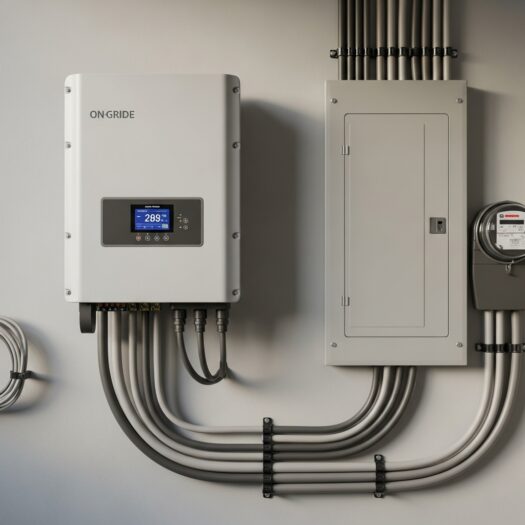
A: Its only major drawback is that it cannot provide power during a grid outage (loadshedding). It requires the grid to be operational to function.
A: No, we handle it for you. Aziz & Co manages the complete net metering application process with your local power distribution company (DISCO), including paperwork and coordination for meter installation.
A: Not directly. A standard on-grid inverter cannot manage batteries. To add storage later, you would need to replace the on-grid inverter with a hybrid inverter. We recommend discussing your long-term plans with our consultants during the initial design phase.
A: The physical installation of your solar system typically takes 3-5 days. The net metering approval and meter installation by the DISCO is a separate process and can take an additional 4-8 weeks, depending on your locality.